
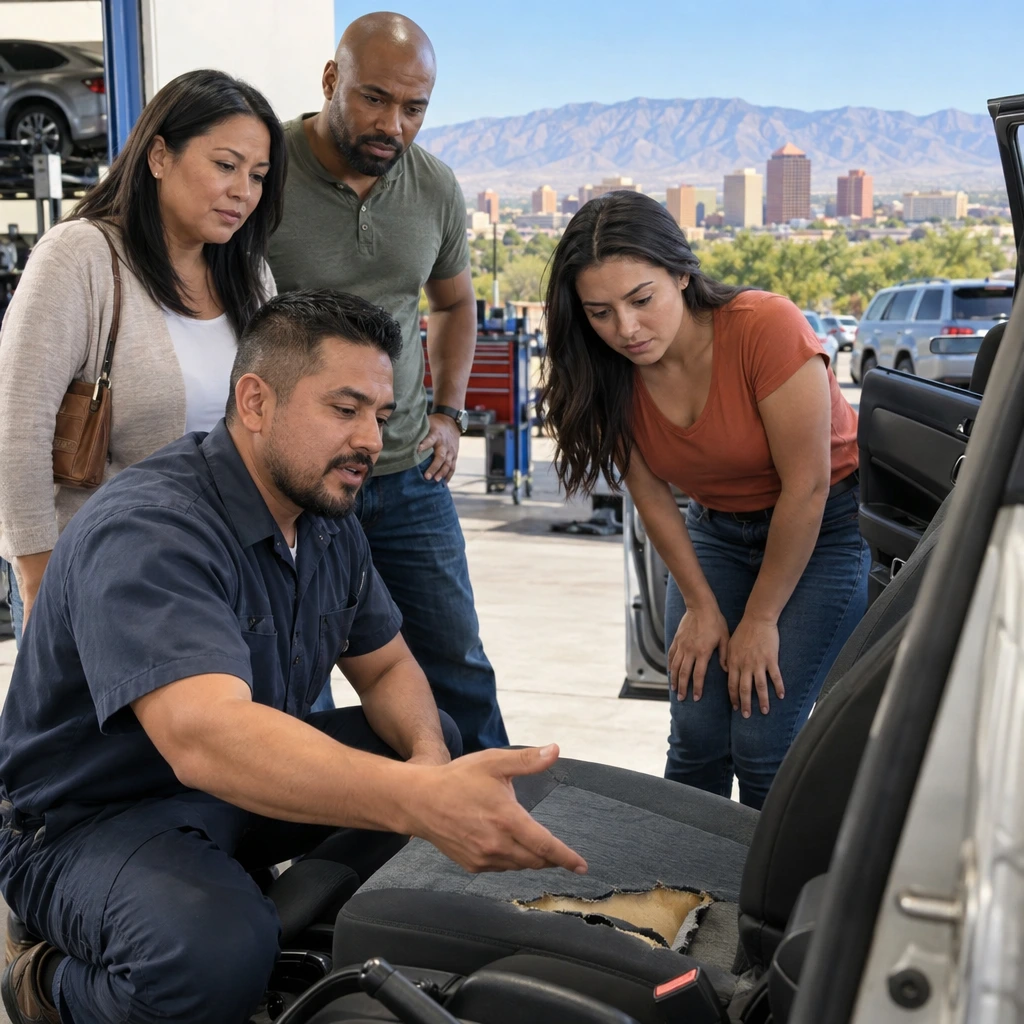
A torn driver’s seat is more than a cosmetic problem. Every time you get in, the tear can grow, the padding can shift, and sharp edges may become uncomfortable against your clothing. If you are searching for torn car seat repair Albuquerque, you probably want a practical answer: Is the seat worth fixing, what will it cost, and can the repair look right in an everyday car?
The good news is that a damaged seat does not automatically mean replacing the entire interior or shopping for another vehicle. The final price depends on the seat’s material, the size and location of the damage, the condition of the surrounding upholstery, and whether the original appearance can be repaired or must be recreated. This guide explains the main car upholstery options, what affects everyday car seat repair cost, how a professional evaluates the damage, and when repair is usually the sensible choice in Albuquerque.
Torn Car Seat Repair Albuquerque: What Affects the Cost?
There is no single price for fixing a torn car seat because two seats that look similarly damaged from above may require very different work. A small split in a side panel is handled differently from a large tear across the seating surface. A repair also becomes more involved when the upholstery has stretched, the foam underneath is damaged, or the material is no longer available.
The most important price factors
- Material: Cloth, vinyl, leather, and synthetic leather each require different repair methods, tools, and matching materials.
- Size and location: A small tear in a flat area may be simpler than damage on a contoured bolster that receives constant friction.
- Condition of nearby panels: Faded, cracked, or weakened upholstery around the tear may not hold a lasting repair.
- Foam and support: If the padding has collapsed or the seat structure is affecting the upholstery, more than surface repair may be needed.
- Color and texture matching: A close match may be available, but an older or unusual interior can require additional work to make the result blend in.
- Whether the panel can be repaired: In some cases, replacing one damaged section is more practical than repairing the original material.
For that reason, a reliable estimate usually requires seeing the seat in person. Photos can help start a conversation, but they may not show stretched material, hidden splitting, or damage beneath the surface. At Al’s Upholstery, you can visit the walk-in shop and showroom at 6616 Central Ave SE, Albuquerque, to discuss the problem and look at upholstery samples with Al.
It is also useful to compare the repair with the cost and inconvenience of replacing the seat, buying a used replacement, or living with damage that continues to spread. A professional repair may be the better value when the seat frame and most of the upholstery are still in good condition.
Car Upholstery Options for a Torn Everyday Seat
When fixing a torn car seat, the right solution depends on the damage and on how closely you want the finished seat to match the original. You may not need to redo the entire seat. In many cases, the repair can focus on one panel or one worn area. However, a complete panel replacement can produce a cleaner and more durable result when the original material has become brittle or badly worn.
Repairing the original panel
A localized repair may make sense when the tear is limited and the surrounding material is strong. The damaged area is stabilized, and the repair is designed to minimize further spreading. This approach can help control cost and preserve as much of the factory upholstery as possible.
Panel repair is especially worth discussing when the tear is fairly new. Waiting can allow a small split to become a larger opening, particularly on a driver’s seat bolster where you slide across the upholstery every day. Sun exposure and repeated use can also make older material less flexible, so a repair should be evaluated before the surrounding area fails as well.
Replacing one seat section
If a panel is badly worn, replacing that section may be more dependable than patching it. A seat commonly includes separate areas such as the center seating surface, outer bolster, or backrest panel. Replacing only the damaged section can restore the seat without requiring a complete interior reupholstery job.
The replacement material might be a close match to the existing upholstery or a deliberate contrast, depending on availability and your preference. Matching color, grain, texture, and sheen is important because a material that looks close under showroom lighting may appear different in Albuquerque’s bright sunlight. Samples can help you compare options before work begins.
Redoing more of the seat
More extensive upholstery work may be appropriate when several panels are torn, the seat has widespread cracking, or the interior has faded unevenly. Redoing a larger portion can create a more consistent appearance and prevent you from repairing one area only to discover another failure shortly afterward.
Not every damaged seat needs this level of work. The goal is to choose the least extensive option that is still durable and visually satisfactory. A conversation with an upholstery professional can help you weigh appearance, daily use, material availability, and budget instead of choosing based only on the size of the visible tear.
How an Upholstery Shop Evaluates a Torn Car Seat
A professional assessment looks beyond the hole or split. The visible damage is only one part of the decision. Before recommending a repair, the upholstery specialist should consider how the seat is built, how often it is used, and whether the proposed solution will hold up to normal entry and exit.
What to inspect before choosing a repair
- Identify the upholstery material. The shop determines whether the seat is cloth, vinyl, leather, synthetic leather, or a combination.
- Check the tear’s edges. Frayed, stretched, or brittle edges can indicate that a simple surface fix may not be enough.
- Examine the surrounding panels. Worn bolsters and nearby seams may be under stress even if they have not visibly torn yet.
- Look beneath the upholstery. Damaged foam or uneven support can contribute to new wear and may need attention.
- Consider the seat’s daily use. A driver’s seat often receives more abrasion than a seldom-used rear seat.
- Discuss the desired appearance. You may want an inconspicuous repair, a matched replacement panel, or a refreshed look for the whole seat.
This evaluation also helps separate upholstery damage from unrelated vehicle problems. For example, a seat that feels low or uneven may have a padding or support issue in addition to a torn cover. Repairing only the outer material may not solve the complete problem.
Bring the vehicle when possible rather than removing the seat first. The upholstery professional can see how the seat fits in the cabin, compare the damaged area with the rest of the interior, and check the color under natural Albuquerque light. If you are contacting a shop before visiting, clear photographs of the entire seat and close-ups of the damage can make the initial discussion more productive.
Al’s Upholstery has been in business since 1992 and specializes in automotive upholstery, along with upholstery repair and other custom work. The shop offers a walk-in showroom where car owners can look at samples and speak with Al about available options.
When Is Fixing a Torn Car Seat Better Than Replacing It?
For an everyday car, the best choice is usually the one that restores comfort and appearance without paying for work the vehicle does not need. Repair is often worth considering when the car is mechanically reliable, the seat frame is sound, and the damage is limited to the upholstery. It can also make sense when the vehicle has an unusual interior, when a matching replacement seat is difficult to find, or when a used seat would be just as worn as the one you already have.
Repair may be the practical choice when:
- The tear is limited to one panel or a small section.
- The existing foam and seat support are still in good condition.
- You want to keep the car’s original appearance.
- A replacement seat may not match the rest of the interior.
- The damage is getting worse but the rest of the vehicle remains dependable.
- You need a quicker alternative to searching for and installing another seat.
Replacement may deserve consideration when the seat has extensive deterioration, multiple failed panels, serious foam damage, or a support problem that cannot be addressed through upholstery alone. Even then, “replacement” does not always mean replacing the entire seat. A new cover or selected upholstery panels may provide the appropriate solution.
Do not ignore a tear simply because it appears small. Sliding across the seat, carrying items, and ordinary temperature changes can enlarge damaged areas. If exposed foam is becoming dirty or the tear is near a seam, prompt evaluation may help prevent a more involved repair later.
Keep in mind that car upholstery repair is different from carpet, rug, or headliner work. Al’s Upholstery does not do car fabric ceilings, car carpet, headliners, or rugs. For a torn seat, however, automotive upholstery is the relevant specialty, and the shop can help you determine whether a repair, panel replacement, or broader seat treatment is appropriate.
Get an Everyday Car Seat Repair Estimate in Albuquerque
A torn seat does not have to define the inside of your car. The most useful first step is to have the damage evaluated before it spreads and before you spend money on an unsuitable replacement. Ask what material is currently on the seat, whether the surrounding panels are still strong, and whether a repair or replacement section will provide the best long-term value.
Al’s Upholstery has served Albuquerque and New Mexico since 1992, with automotive upholstery as its specialty. You can visit the walk-in shop and showroom at 6616 Central Ave SE, Albuquerque, NM 87108, during business hours: Monday through Thursday from 7:30 AM to 4 PM and Friday from 6:30 AM to noon. The shop is closed Saturday and Sunday.
Call (505) 242-3583 or visit alsupholsterynm.com to discuss your torn car seat. With a 100% satisfaction guarantee and a warranty on select work, Al’s Upholstery can help you compare practical car upholstery options and decide whether fixing your everyday seat is the right investment.