
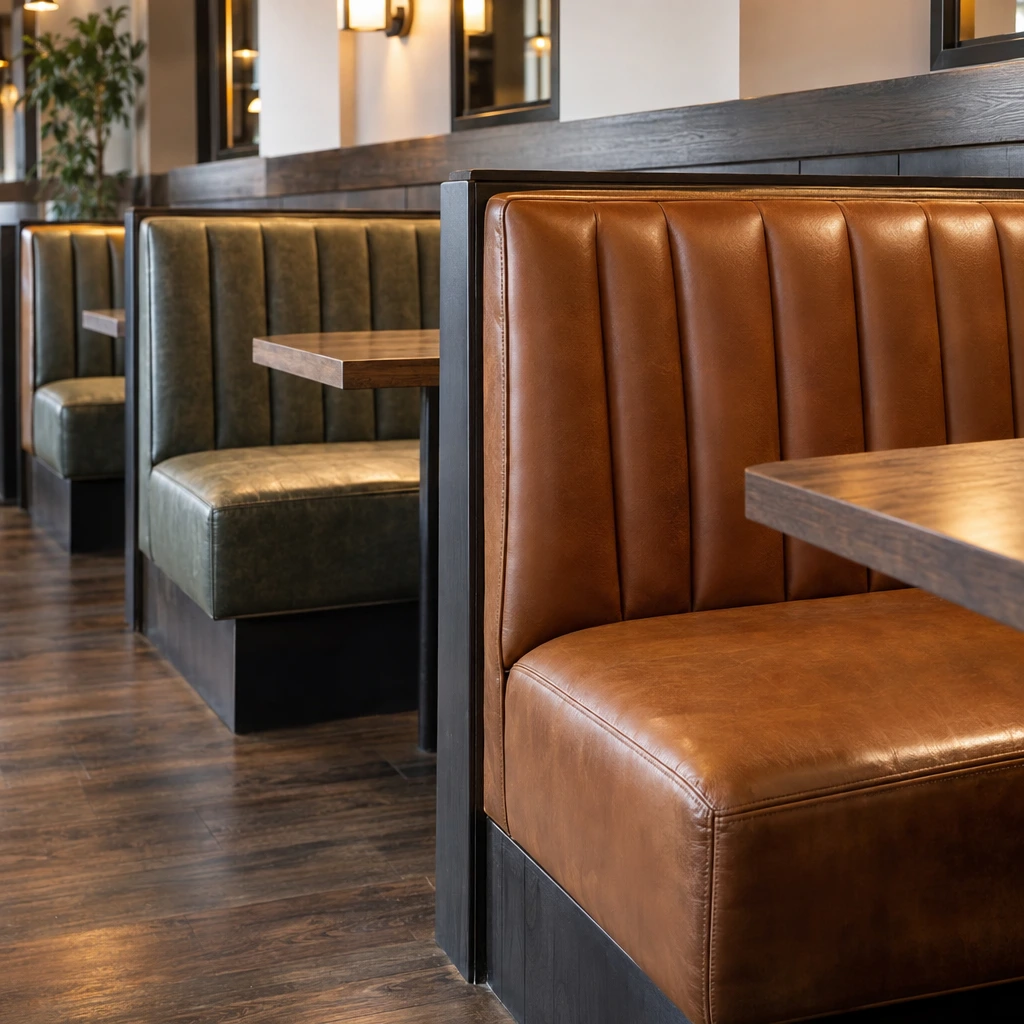
When a restaurant booth has split seams, cracked upholstery, flattened padding, or a permanently stained seat, you have an important business decision to make: should you repair the booth, or is it time to replace the upholstery completely? For restaurant owners in Albuquerque, the right choice depends on the condition of the cover, foam, frame, and surrounding seating—not just on how bad the damage looks at first glance. Restaurant booth upholstery Albuquerque services can often restore seating without the disruption and expense of replacing entire booths, but repair is not always the best long-term answer. This guide explains how to compare repair and replacement, what affects restaurant seating repair cost, how durable restaurant upholstery supports daily operations, and when to have a professional inspect the booth. With the right decision, you can improve the appearance of your dining room, protect customer comfort, and keep downtime under control.
Restaurant Booth Upholstery Albuquerque: When Is Repair Enough?
Repair is often the practical choice when the booth’s main structure is still sound and the damage is limited to one area. A torn seam, small puncture, loose stitching, or localized wear may not justify removing and recovering the entire seat or back. In those situations, commercial upholstery repair can address the damaged section while preserving the rest of the booth.
However, a visible tear is not always the full problem. Restaurant seating receives repeated use every day. Customers slide in and out, children may stand or kneel on the seats, and spills can work their way beneath the upholstery. A small opening can grow quickly when the material is under constant tension. Repairing it early may prevent a larger section from needing replacement later.
Signs a booth may be repairable
- The damage is limited to one seam, panel, or small area.
- The seat still feels supportive and comfortable.
- The foam has not permanently collapsed or broken down.
- The booth frame is stable and does not shift, squeak, or feel loose.
- The surrounding upholstery remains flexible and in usable condition.
A professional can also help determine whether a repair will blend acceptably with the existing upholstery. Matching an older material may be more difficult if it has faded, stretched, or changed color from cleaning and sunlight. In some cases, a carefully selected repair is the most economical solution. In others, replacing a complete panel creates a more consistent appearance and avoids making one new-looking section stand out.
The key is to assess the booth as a working piece of commercial seating, not merely as a damaged surface. A low-cost patch that fails quickly can create another service interruption. A properly planned repair may extend the useful life of the booth and keep your dining room looking cared for.
When Replacing Restaurant Booth Upholstery Makes More Sense
Replacement is usually worth considering when wear is widespread or when the upholstery has reached the end of its serviceable life. Multiple tears, peeling surfaces, badly stained panels, exposed padding, and flattened cushions can make a booth look untidy even after individual spots are repaired. If your staff is constantly trying to hide damage or explain uncomfortable seating to customers, a broader upholstery project may be the better investment.
Replacement can also make sense when the existing material is no longer suitable for the way your restaurant operates. Restaurant seating must handle frequent use, regular cleaning, and spills. A material that looked attractive when first installed may not have provided the durability or cleanability your dining room requires. When recovering the booth, you have an opportunity to discuss materials and finishes that better fit your traffic level and maintenance routine.
Look beyond the outer cover
Upholstery replacement should not be viewed as changing only the visible surface. The condition of the padding matters just as much. If the foam is compressed, uneven, or no longer comfortable, installing a new cover over it may leave you with a booth that looks better but still feels worn out. Likewise, a damaged base or unstable frame should be identified before the work begins.
Ask for an evaluation of the complete seating area, including:
- The top and bottom edges where customers regularly contact the booth.
- Seams and corners that receive repeated stress.
- Foam density, cushion shape, and overall support.
- The condition of the backing, seat base, and frame.
- Areas affected by moisture, food, cleaning products, or prolonged sunlight.
Replacing several related sections at once can also create a more uniform appearance than completing isolated repairs over time. For a restaurant planning a refresh, new upholstery may update the dining room without requiring the purchase and installation of entirely new booths.
What Affects Restaurant Seating Repair Cost in Albuquerque?
There is no single restaurant seating repair cost because every booth has a different combination of damage, construction, size, and material. A simple repair and a full booth recovery are very different projects. Getting an evaluation before making a budget decision helps you compare the likely cost of repairing the current upholstery with the value of restoring the seating properly.
Important cost factors
- Extent of the damage: A small tear or separated seam generally involves less work than multiple damaged panels or widespread surface failure.
- Number of booths: Repairing one booth is different from recovering a full dining room. The total quantity affects labor, scheduling, and material needs.
- Booth size and design: Oversized, curved, tight, or unusually shaped booths can require more time than straightforward seating.
- Condition of the padding: Reusing sound foam may keep the project simpler, while worn or uneven padding may need attention during replacement.
- Material selection: The chosen upholstery material, color, texture, and finish all influence the project. A commercial setting may need a different solution than a lightly used residential seat.
- Access and removal: Booths that are difficult to move or separate from the dining area may require additional planning.
- Matching existing seating: Matching older upholstery can be more complicated than selecting a coordinated new material for all affected booths.
It is also important to consider the cost of disruption. A repair may be the least expensive option today, but repeated repairs can become inefficient if the upholstery is failing in several places. Conversely, full replacement may be unnecessary if the frame, foam, and most of the cover remain in good condition. A professional comparison should include both the immediate work and the expected usefulness of the result.
Al’s Upholstery is known for fast turnaround and fair prices, but the appropriate recommendation should be based on your actual booths. You can bring questions to the walk-in shop and showroom, where you can look at samples and talk with Al about the condition of your seating and the priorities for your business.
How to Choose Durable Restaurant Upholstery for Your Business
The best restaurant upholstery is not simply the material with the lowest initial price or the most attractive appearance in a sample. It should suit your restaurant’s traffic, cleaning routine, design, and customer use. A busy dining room places different demands on booth seating than a quieter location, so describe how the booths are used when discussing your options.
Consider the following questions before choosing a repair or replacement plan:
- How many hours each day are the booths occupied?
- Do customers frequently spill food or drinks on the seating?
- How often does your staff clean and disinfect the upholstery?
- Are particular corners or seat fronts wearing faster than the rest?
- Do you need the repaired area to blend with existing seating?
- Are you updating the restaurant’s colors or visual identity?
- Can the work be scheduled in stages to limit dining-room disruption?
Durable restaurant upholstery should also remain comfortable. Extremely hard or thin seating may be difficult for customers, while insufficiently supported foam can flatten quickly. The right balance depends on the booth design and intended use. A professional upholstery shop can help you compare samples and think through appearance, maintenance, and expected wear instead of choosing based on color alone.
Cleaning practices matter, too. Follow the care guidance appropriate for the selected material, and address spills promptly rather than allowing moisture to remain in seams or cushions. Avoid using harsh products unless they are known to be suitable for the upholstery. Regular inspection can identify loose stitching or small openings before they become larger commercial upholstery repair projects.
Repair or Replace: A Practical Decision for Albuquerque Restaurants
Start by separating cosmetic damage from structural or comfort problems. If the booth is stable, supportive, and mostly intact, a targeted repair may restore its appearance and extend its service life. If the upholstery is failing across several areas, the foam is uncomfortable, or the booth no longer suits your cleaning and traffic demands, replacement is more likely to provide lasting value.
Before approving the work, ask for clear answers about:
- Which parts can be repaired and which parts should be replaced.
- Whether the existing foam and structure are suitable for continued use.
- How the proposed material fits your restaurant’s daily demands.
- Whether the work can be completed in stages.
- What warranty coverage applies to the selected work.
Photos can help begin a conversation, but an in-person look is often more useful because upholstery damage may extend beneath the visible surface. Bringing measurements and photographs of the affected booths can also help when planning a project. If your restaurant is in Albuquerque, Rio Rancho, Santa Fe, or elsewhere in New Mexico, Al’s Upholstery serves commercial clients and handles restaurant upholstery projects with a focus on practical results. The shop has been in business since 1992 and offers a 100% satisfaction guarantee, with a warranty on select work.
Improve Your Restaurant Seating with Al’s Upholstery
You do not have to decide between repair and replacement by judging a torn booth from across the dining room. A professional evaluation can show whether the damage is isolated, whether the padding still provides proper support, and whether new upholstery would be a better long-term investment. The right work can make your restaurant look cleaner, improve customer comfort, and reduce the distraction of recurring seating problems.
Visit Al’s Upholstery at 6616 Central Ave SE, Albuquerque, NM 87108, to look at samples and discuss your booths with Al. The shop is open Monday through Thursday from 7:30 AM to 4 PM and Friday from 6:30 AM to 12 PM, and is closed Saturday and Sunday. You can also call (505) 242-3583 or visit alsupholsterynm.com to get started. Whether your restaurant needs a focused repair or a complete seating refresh, a careful comparison can help you choose work that fits your budget and your business.