
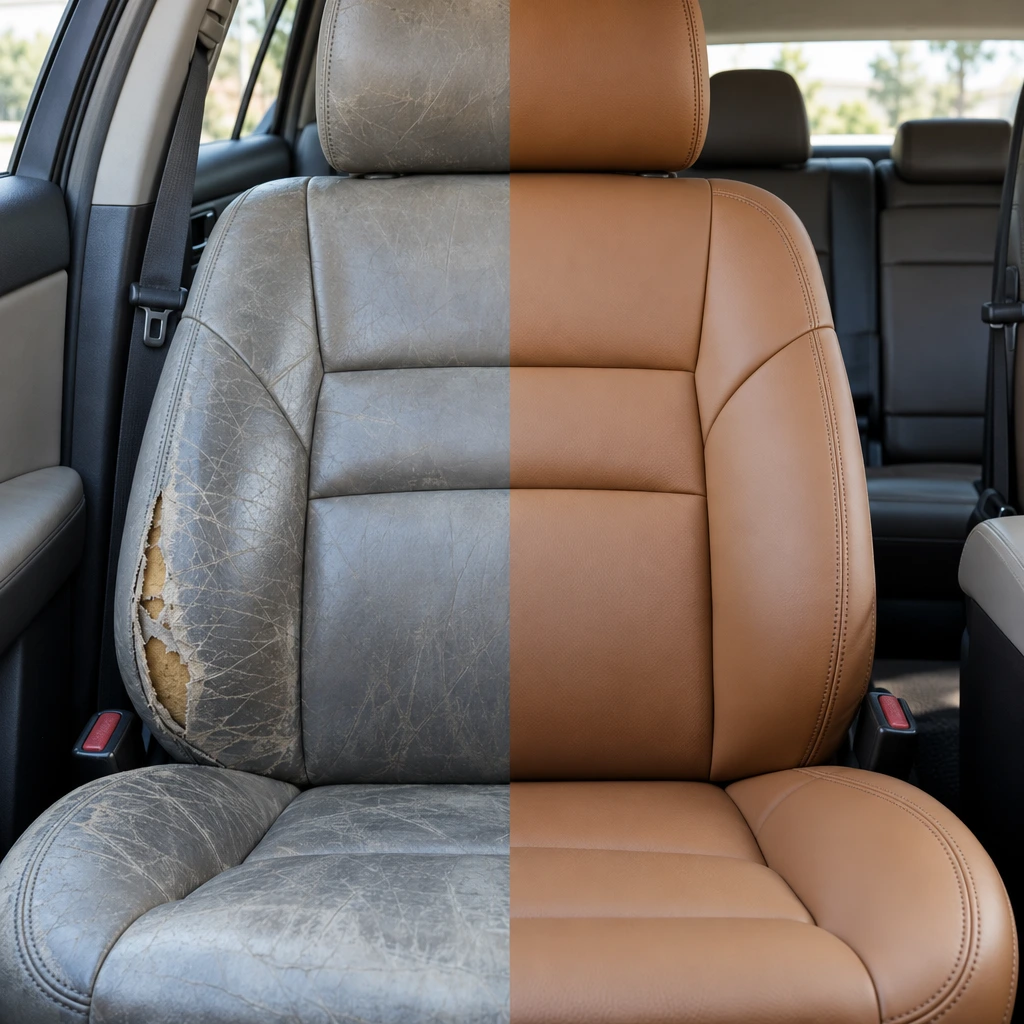
When your car seat is torn, cracked, flattened, or pulling away at the seams, the first question is usually simple: should you repair the damaged area, or reupholster the entire seat? For drivers searching for repair car seats Albuquerque, the right answer depends on more than the size of the tear. The seat’s age, material, foam condition, matching requirements, daily use, and overall condition all matter. A small vinyl split may be a straightforward repair, while a heavily worn driver’s seat may be a better candidate for complete reupholstery.
This guide explains how to compare those options before you spend money. You will learn what a professional upholstery inspection looks for, which damage can often be repaired, when a full redo makes more sense, and how material and vehicle use affect the decision. If you are comparing Albuquerque car upholstery shops, you can also bring your questions and your vehicle to Al’s Upholstery for an in-person evaluation.
Repair Car Seats Albuquerque Drivers Should Consider First
Repair is often the practical choice when the damage is limited and the rest of the seat remains in good condition. A professional may be able to address a torn seam, a small split, a localized worn section, or minor damage without removing and rebuilding the entire seat cover. This can preserve more of the original upholstery while addressing the problem that is bothering you most.
However, the visible damage is only part of the story. A tear may have started because the material became brittle, the seam was under repeated stress, or the underlying foam has shifted. If the surrounding upholstery is still flexible and strong, a localized repair may hold up well. If the material around the tear is already thin or cracked, repairing one spot may only postpone a larger project.
Signs a localized repair may be enough
- The damage is confined to one small area.
- The surrounding leather, vinyl, or cloth is still in good condition.
- The seat cover is not broadly faded, cracked, or stretched.
- The foam still provides even support.
- You are trying to keep the vehicle usable while addressing a specific problem.
Repair may also make sense when the rest of your vehicle is original and you want to preserve as much of it as possible. For example, a classic or older daily driver may have upholstery that is worn in one predictable location but still has character and strength elsewhere. A careful repair can be less disruptive than replacing every seat cover.
Still, a repair is not always invisible. Matching color, grain, texture, and wear can be challenging, especially on older upholstery that has changed with age and sunlight. During an inspection, ask what result is realistic. A good repair should improve the seat’s appearance and function, but an exact match may depend on the material and the condition of the original upholstery.
When Reupholstering the Whole Seat Is the Better Choice
Complete reupholstery usually becomes more attractive when damage is widespread or when the seat needs more than a surface fix. If the driver’s seat is cracked across several panels, the seams are failing in multiple places, or the upholstery has become hard and brittle, replacing the cover can provide a more consistent result than patching one section at a time.
This option can also be worthwhile when the seat feels uncomfortable. Upholstery covers and foam work together, so a seat that looks worn may also have collapsed or uneven cushioning. Reupholstery can give the shop an opportunity to evaluate the padding and address the cover and support as part of one project. The exact work required depends on the seat’s construction and condition.
Common reasons to reupholster instead of repair
- Cracks or tears appear across multiple panels.
- The original material is brittle, peeling, or badly discolored.
- Several seams are separating at the same time.
- The foam feels flat, uneven, or uncomfortable.
- You want a coordinated appearance across the front seats or the entire interior upholstery.
- A restoration requires a particular material, color, or period-appropriate look.
Reupholstering may also be the more economical long-term decision when the material has reached the end of its useful life. Choosing a small repair because it costs less today can lead to repeated visits if nearby areas continue to fail. By contrast, a properly planned reupholstery project may address the underlying wear in a single visit.
That does not mean every worn seat needs a complete redo. The best choice depends on how long you plan to keep the vehicle, how much you drive, and whether matching the other seats matters to you. A passenger seat that is rarely used may not need the same scope of work as a heavily worn driver’s seat. An upholstery professional can help you compare those priorities rather than automatically recommending the largest project.
What Affects Reupholster Car Seats Cost?
If you are researching reupholster car seats cost, it helps to know why upholstery estimates vary. There is no single price for every car seat because each vehicle and each condition is different. The cost is shaped by the amount of labor, the materials selected, the number of seats involved, and whether the foam or structure needs attention.
Condition and amount of work
A simple repair generally involves less work than removing and rebuilding a complete seat cover. However, the location of the damage matters. A tear on a flat, accessible panel may be easier to address than damage on a contoured bolster or a section with complex stitching. Extensive disassembly, pattern work, sewing, and installation can all affect the estimate.
Foam condition is another important factor. If the foam is sound, the project may focus primarily on the cover. If it is compressed, broken down, or uneven, additional work may be needed to restore comfort and shape. Be sure to mention any discomfort, sinking, or uneven support when you request an estimate.
Material and design choices
Car seat upholstery options can range from replacement material selected to coordinate with the existing interior to a more customized change in color, texture, or design. Material choice affects both the look and the expected durability. The right selection depends on how often you drive, whether the vehicle sits in the Albuquerque sun, how much cleaning the seats receive, and whether originality is important.
Other factors that may influence an estimate include:
- Whether one seat, a pair of seats, or multiple seating areas are involved.
- Whether the existing pattern can be reused or a new pattern must be created.
- The number of seams, panels, piping details, or decorative elements.
- Whether the upholstery must closely match the remaining interior.
- The availability of a suitable color, grain, or texture.
- The vehicle’s design and how accessible the seat is for removal and installation.
The best way to get a useful estimate is to have the seat inspected rather than relying on a general online range. At Al’s Upholstery, you can visit the walk-in shop and showroom at 6616 Central Ave SE in Albuquerque to look at samples and discuss the project with Al. The shop is known for fair prices and fast turnaround, but the actual scope and timing should be confirmed for your specific seat.
How to Compare Car Seat Upholstery Options
Choosing between repair and reupholstery is also a material decision. Your existing upholstery may be leather, vinyl, cloth, or a combination of materials. Each has a different appearance, feel, maintenance routine, and aging pattern. The best option is not necessarily the most expensive material; it is the one that fits how you use the vehicle.
Consider daily use and Albuquerque conditions
A vehicle driven every day needs upholstery that can handle repeated entry and exit, friction, spills, and regular cleaning. A work truck may need a different approach from a weekend classic car. If the vehicle is frequently parked outside, heat and strong sunlight should also be part of the conversation. Ask which materials are appropriate for your driving habits and how to care for them after the work is complete.
Think about the areas that wear first. Driver’s seat bolsters often experience more friction than rear seating. If only one section is failing, a repair or partial replacement may be sensible. If the entire seat has a tired appearance, a coordinated reupholstery plan may produce a better visual result.
Balance originality with practicality
For an older vehicle, you may want the replacement material to resemble the original as closely as possible. For a newer daily driver, durability and easy maintenance may matter more than exact originality. You might also want to refresh only the most heavily used seat while keeping the rest of the interior unchanged.
Before approving the work, ask these questions:
- Can the damaged area be repaired without weakening the surrounding material?
- Would the remaining upholstery look noticeably different from the repaired section?
- Is the foam still supporting the seat properly?
- Which material best fits my daily use and cleaning needs?
- Would repairing one seat make the others look mismatched?
- What work is covered by the shop’s warranty, if applicable?
It is also wise to separate upholstery concerns from mechanical or safety concerns. A seat with damaged upholstery should be evaluated as upholstery, but issues involving seat belts, electrical components, controls, or other vehicle systems may require a qualified automotive service professional. Tell the upholstery shop about any features built into the seat so the work can be planned appropriately.
Where to Get an Automotive Upholstery Evaluation in Albuquerque
A photo can help start a conversation, but an in-person inspection is more useful when the decision is repair versus reupholstery. A shop can examine the tear, test the surrounding material, assess the cushion’s condition, and compare available samples with your vehicle’s interior. Bring the vehicle if possible, and explain whether you want a close match, a durability upgrade, or the most budget-conscious solution.
Al’s Upholstery has been in business since 1992 and specializes in automotive upholstery. The shop serves Albuquerque, Rio Rancho, Santa Fe, and communities throughout New Mexico. You can visit the walk-in showroom at 6616 Central Ave SE, Albuquerque, NM 87108, look at material samples, and talk with Al about your car or truck seats.
Al’s Upholstery offers a 100% satisfaction guarantee and a warranty on select work. Before scheduling, ask about the expected scope, material availability, turnaround, and care instructions. The shop is open Monday through Thursday from 7:30 AM to 4 PM and Friday from 6:30 AM to 12 PM; it is closed Saturday and Sunday. For an appointment or estimate, call (505) 242-3583.
Conclusion: Choose the Seat Solution That Fits Your Vehicle
Repair is often the right answer when damage is limited and the surrounding upholstery remains strong. Reupholstery is usually worth considering when the material is failing across several areas, the foam is uncomfortable, or you want a consistent refreshed appearance. The most affordable choice upfront is not always the best long-term value, so consider your vehicle’s age, daily use, interior condition, and how long you plan to keep it.
When you are ready to compare automotive upholstery decisions, bring your car or truck to Al’s Upholstery in Albuquerque. A hands-on evaluation can help you understand whether a targeted repair will solve the problem or whether reupholstering the seat is the more durable choice. Call (505) 242-3583 or visit the shop to discuss your options.