
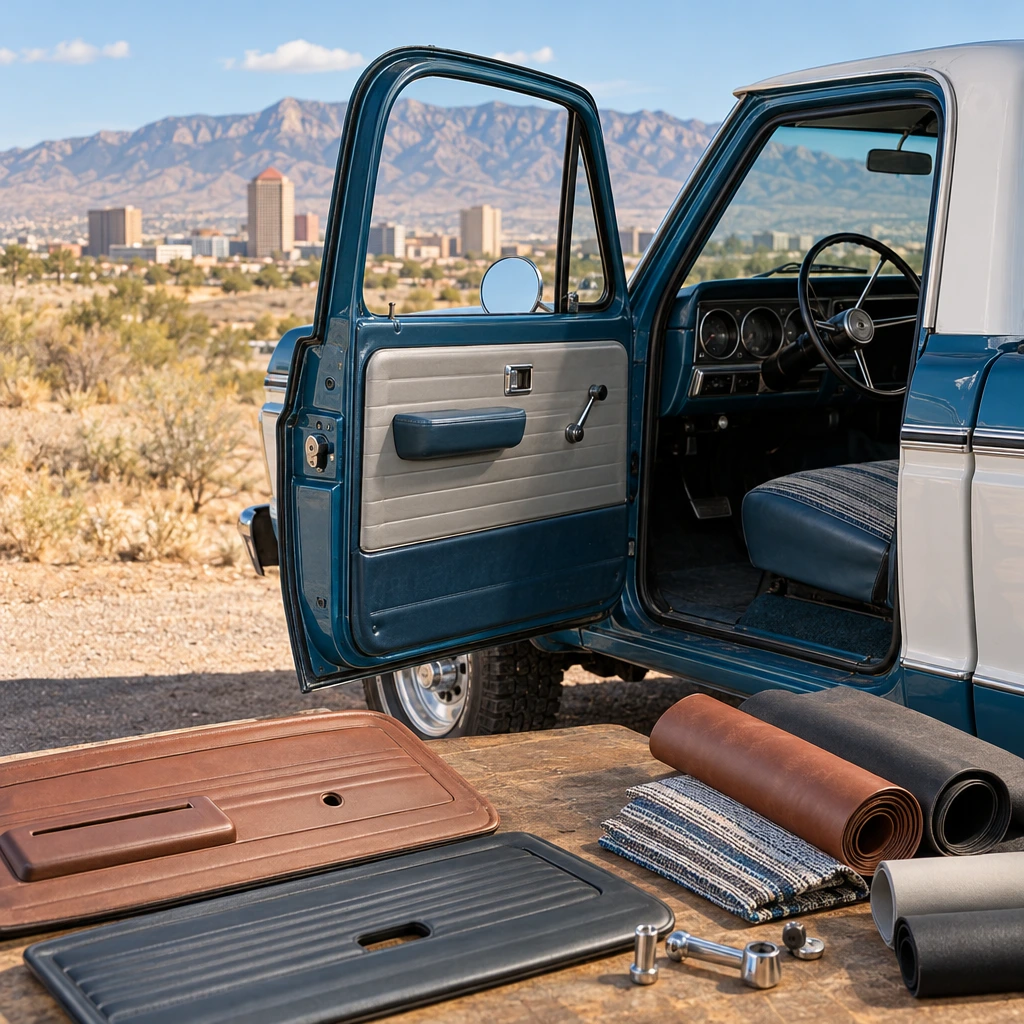
If you are planning classic truck door panel restoration in Albuquerque, the right materials and preparation can make the difference between a convincing period-correct interior and a replacement that looks out of place. Door panels on vintage pickups often suffer from cracked vinyl, warped backing, missing trim, broken clips, and moisture damage. Because these parts are visible every time you open the door, restoring them carefully can significantly improve the truck’s appearance without replacing an otherwise solid interior. This guide explains how classic truck door panels are evaluated, which materials are commonly used, what affects the cost, and how to prepare for an upholstery estimate. Whether you are restoring a muscle-era pickup, an older work truck, or a lowrider in New Mexico, you will have a clearer idea of what the project involves before you visit a shop.
Classic Truck Door Panel Restoration Albuquerque: What Is Being Restored?
A door panel is more than a sheet of upholstery. It is a layered assembly designed to fit the door, support trim, protect the interior, and complete the truck’s original design. A restoration may involve repairing or replacing the backing board, installing new padding, recovering the visible surface, and refitting details such as armrests, handles, bezels, clips, and decorative trim.
The first step is determining what can be saved. Some panels have good original boards with only torn vinyl. Others look acceptable from the front but are swollen, cracked, or disintegrating behind the covering. A panel that has been exposed to water may need more extensive rebuilding, especially along the lower edge. The condition of the door itself also matters because loose hardware, rust, or damaged mounting points can prevent a restored panel from sitting correctly.
Common problems on vintage truck panels
- Cracked, brittle, faded, or torn vinyl
- Warped fiberboard or deteriorated backing
- Missing or broken retaining clips
- Collapsed foam or padding
- Loose armrests and damaged door pulls
- Staining or mildew from water entering the door
- Incorrect replacement panels from an earlier repair
Classic car door panel repair may be a small job when the original panel is structurally sound. However, a full restoration is more involved when the goal is to reproduce the original shape, stitching, texture, color, and trim placement. For that reason, photographs or online descriptions are not always enough to determine the work. Bringing the truck, the loose panel, or as many original pieces as possible allows the upholstery shop to inspect the fit and condition directly.
Choosing Materials for Vintage Truck Upholstery
Material selection should follow the truck’s era, intended use, and original interior design. A show-focused restoration may call for a close visual match to factory vinyl. A truck that is driven regularly may benefit from a durable modern upholstery material that maintains the period appearance while offering improved resistance to wear and cleaning.
Vinyl for a period-correct appearance
Vinyl is a common choice for classic truck door panels because many original interiors used it. It is available in a wide range of colors, grains, textures, and levels of gloss. Matching the surface texture can be just as important as matching the color. A smooth black material, for example, will not look the same as a lightly grained factory-style vinyl even if the shade is similar.
For an Albuquerque truck, consider how the interior will be used. Strong sunlight and heat can be hard on low-quality materials. A reputable upholstery shop can help you compare samples and choose a material appropriate for a vehicle that may spend time outside, attend shows, or be driven regularly.
Cloth, foam, and accent materials
Some classic trucks used cloth inserts, patterned centers, or combinations of vinyl and fabric. These details can be recreated when the correct material is available or when a suitable period-style alternative can be found. Foam may also be replaced or reshaped to restore a panel’s original contour. Too much padding can make the panel look swollen, while too little can leave it flat and uneven.
When selecting materials, think about these questions:
- Do you want an exact-looking original restoration or a durable interpretation?
- Will the truck be a daily driver, a weekend vehicle, or a show vehicle?
- Do all panels need to match, or are you restoring only one damaged side?
- Are the seats and armrests being updated at the same time?
- Do you have original material, trim, or photographs for reference?
Albuquerque classic car upholstery projects often require careful color comparison because old materials may have faded unevenly. A new panel that matches a faded seat may not match the original factory color, so viewing physical samples beside the truck is helpful.
What Affects Classic Truck Door Panel Restoration Cost?
There is no single price for restoring a classic truck door panel. The cost depends on the condition of the existing parts, the number of panels, the chosen material, and the amount of custom work required. A simple recover is priced differently from a complete rebuild with new backing, foam, trim work, and special stitching.
The main cost factors
- Panel condition: Sound backing and reusable hardware can reduce labor. Broken, warped, or missing components require additional preparation.
- Scope of work: Recovering one panel costs less than restoring a complete set, but matching multiple panels may require more measuring and pattern work.
- Material choice: Standard automotive vinyl, specialty textures, cloth inserts, and premium materials differ in price and availability.
- Design details: Pleats, contrasting colors, piping, French seams, emblems, and decorative stitching add time and materials.
- Replacement parts: Missing clips, armrest components, trim, and backing materials may need to be sourced or carefully reproduced.
- Fit and patterning: A non-original or previously modified panel may require additional fitting before it can be covered properly.
Labor is often the largest part of a professional restoration because the old covering must be removed, the panel inspected, a pattern created or corrected, and the new material installed without wrinkles or distortion. If the job includes both sides of the truck, the upholstery can be matched for color and design rather than treating each panel as a separate repair.
Before approving work, ask whether the estimate includes material, removal of the old covering, backing repairs, foam, hardware, and installation. Also ask what happens if hidden damage is found after disassembly. A clear conversation at the beginning helps prevent surprises and makes it easier to compare estimates from different shops.
How to Prepare for an Albuquerque Classic Car Upholstery Estimate
Good preparation can make the consultation more productive. If possible, bring the truck to the shop so the door alignment, interior color, and surrounding upholstery can be viewed together. If the panels are already removed, bring every related piece, including clips, screws, armrests, trim, and door handle bezels. Small parts can determine how the finished panel is assembled and installed.
Information that helps the upholsterer
- The truck’s year, make, and model
- Whether the panels are original or aftermarket replacements
- Which parts are missing or no longer usable
- Whether you want a factory-style restoration or a custom design
- Photos of the original interior, if available
- How the truck will be used after restoration
It is also useful to decide whether you want the restored panels to match the seats exactly or coordinate with them. If the seats are original but faded, a new material may be selected to match the intended design rather than the current weathered color. Conversely, if the seats are being reupholstered later, planning the materials together can create a more consistent interior.
Do not discard damaged original pieces before an inspection. Even a torn panel can provide a valuable pattern, reveal the factory stitch layout, or show where trim was originally positioned. A piece that appears unusable may still help reproduce the correct shape.
Repair, Re-cover, or Rebuild the Door Panels?
The best solution depends on your restoration goals and the panel’s condition. A repair may be appropriate when the damage is limited to a seam, small tear, or loose section. Re-covering is more suitable when the backing remains strong but the visible material is badly faded or cracked. Rebuilding becomes necessary when the structure has warped, softened, or lost its mounting points.
For a truck being restored carefully, replacing only one severely damaged panel can create an obvious mismatch. Even when the color is close, differences in grain, wear, and sheen may stand out. Restoring a pair or a complete set can provide a more uniform appearance, particularly on a vehicle intended for shows or long-term ownership.
That does not mean every project needs the most expensive option. A professional evaluation can help you prioritize. You might restore the visible front panels first, repair reusable hardware, and plan less-visible improvements for a later stage. The important point is to choose a solution that fits the truck’s condition rather than covering structural problems with new material.
Al’s Upholstery has served Albuquerque and New Mexico since 1992 and works with classic car and truck owners who care about original details and clean workmanship. At the walk-in shop and showroom, you can look at material samples and discuss the project with Al. The shop offers a 100% satisfaction guarantee, with a warranty on select work, and is known for fair prices and fast turnaround.
Plan Your Classic Truck Door Panel Restoration
Restoring classic truck door panels is an opportunity to protect the character of your vehicle while making the interior look finished and usable again. The right result starts with an honest inspection, appropriate materials, and a clear understanding of whether the panels need a repair, a recover, or a complete rebuild. Cost is shaped by condition, material, design, hardware, and labor—not simply by the size of the panel.
For a local consultation, visit Al’s Upholstery at 6616 Central Ave SE, Albuquerque, NM 87108, or call (505) 242-3583. The shop is open Monday through Thursday from 7:30 AM to 4 PM and Friday from 6:30 AM to 12 PM; it is closed Saturday and Sunday. You can also learn more at alsupholsterynm.com. Bring your original panels or truck photos, and you can begin choosing a restoration approach that respects both the era of the vehicle and the way you plan to enjoy it.