
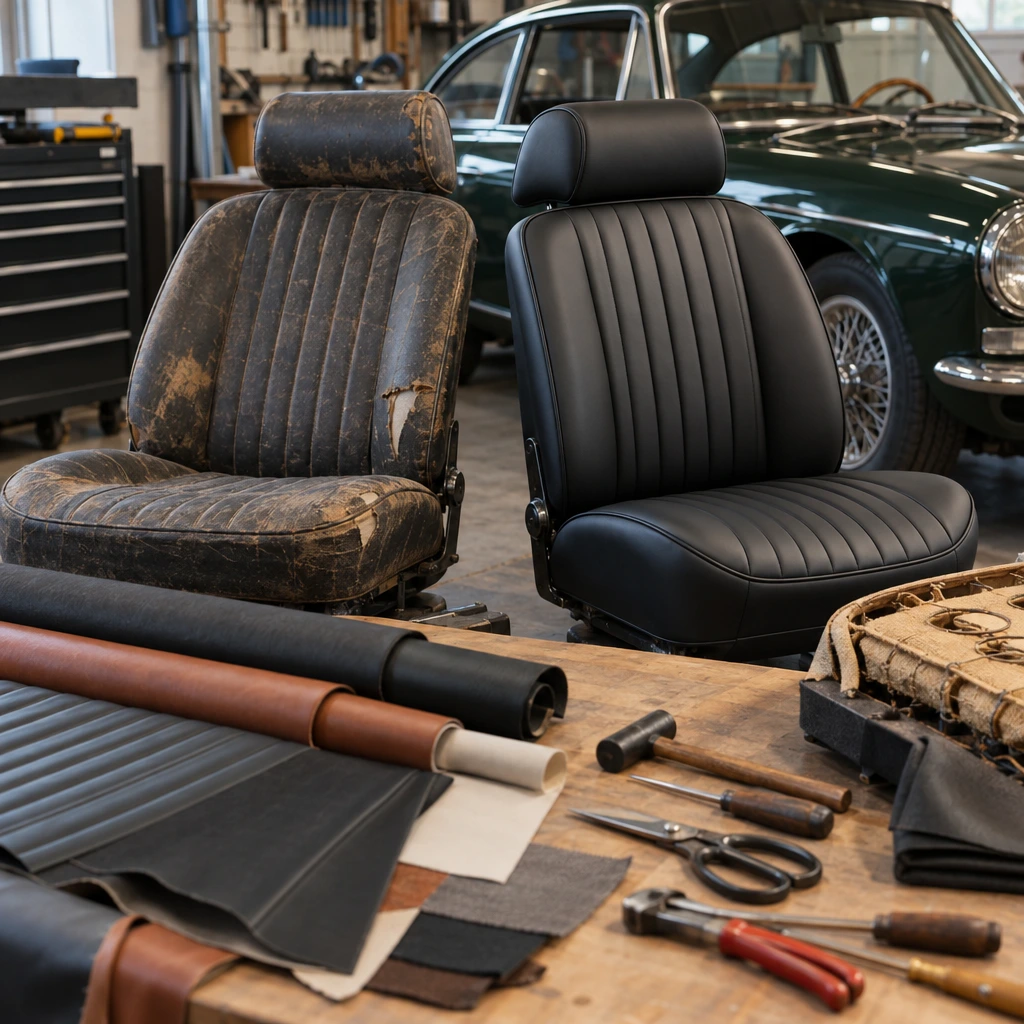
If you are searching for classic car seat reupholstering Albuquerque, you probably want more than a new-looking interior. You want your muscle car, classic truck, lowrider, or VW bus to look correct for its year while still being comfortable enough to drive. Reupholstering classic car seats is a detail-oriented process: the shop must evaluate the original seat design, foam, springs, frame, stitching, material, color, and trim before deciding what should be preserved and what needs to be replaced. In this guide, you will learn what to expect when you bring a vintage vehicle to Al’s Upholstery, which materials may be appropriate, what affects the cost, and how to prepare for a productive consultation.
What to Expect With Classic Car Seat Reupholstering in Albuquerque
The first step is an inspection rather than an immediate material selection. Classic seats can look worn on the surface while still having usable foam or a solid frame. In other cases, the cover may be the least serious problem. Rusted springs, broken seat supports, compressed foam, weakened burlap, or damaged mounting areas can affect the finished result if they are not identified early.
At Al’s Upholstery, you can bring your vehicle or seat components to the walk-in shop and discuss the project with Al. The showroom allows you to look at samples and compare possible colors, textures, and grades before work begins. That conversation matters because “make it look original” can mean different things. You may want an exact restoration, a durable period-style replacement, or a custom interior that keeps the classic character while adding comfort.
The inspection usually covers more than the seat cover
A professional evaluation may consider:
- The condition of the seat frame, springs, supports, and hardware
- Whether the original foam can be reused, repaired, reshaped, or replaced
- The number and placement of seams, pleats, listing areas, and decorative details
- The original material, grain, color, texture, and finish
- Whether the seat has been modified by a previous owner
- Whether matching work is needed on a bench seat, bucket seats, rear seat, or panels
Bring photographs, old restoration records, factory brochures, build information, or a surviving piece of original upholstery if you have them. Small details can help identify what the interior looked like when the car was new. If the vehicle is rare, documentation can be especially useful because a previous reupholstery job may not reflect the original design.
Preservation and replacement are not always the same thing
Historic preservation guidance from the National Park Service emphasizes documenting original materials, repairing deteriorated features when feasible, and matching replacement work to the original design, color, texture, and materials where possible. That principle is useful for classic cars too, although an upholstery project must also meet modern expectations for safety, comfort, and daily use. See the National Park Service restoration guidelines for the broader preservation approach.
For example, a small split in one panel may call for repair rather than a complete seat replacement. However, brittle material across every seating surface may make a full set of new covers the more sensible long-term choice. The right answer depends on the condition of the original upholstery and your restoration goals.
Choosing Materials for Classic Car Upholstery
Materials for classic car upholstery should be selected by era, design, use, and appearance—not simply by choosing the most expensive option. A factory-correct restoration may require a specific vinyl grain, cloth pattern, embossed design, or combination of materials. A custom lowrider or restomod may use upgraded vinyl, leather, contrasting inserts, or custom stitching while still following the vehicle’s original seat shape.
Vinyl, cloth, leather, and combination interiors
Many classic vehicles originally used vinyl because it was practical, easy to clean, and available in period-specific textures. Vinyl can be a strong choice for a driver-quality restoration, especially when the correct grain and color are available. Cloth inserts can provide a more authentic look for certain sedans, trucks, and muscle cars, while leather may be appropriate for a higher-end model or a custom interior.
Leather can offer a distinctive appearance and soft feel, but it also requires appropriate care. Classic-car publication Hagerty advises regular attention to older leather and warns that repeated use of high-alcohol cleaning products can dry or damage the surface. Its classic car maintenance guide recommends gentle cleaning and conditioning practices for leather seats.
For Albuquerque drivers, also consider how the vehicle will be stored and used. A car kept in a controlled garage has different upholstery needs from one that is frequently parked outdoors, driven to shows, or used on summer road trips. Tell the upholsterer whether originality, durability, easy cleaning, comfort, or a specific visual effect is your top priority.
Matching original car upholstery requires research
Matching original car upholstery is not only about finding a similar shade of red, black, tan, or blue. The texture, sheen, stitch spacing, seam direction, piping, pleat width, and panel layout can change the entire appearance of the interior. Two materials may look similar in a sample book but appear very different once stretched across a seat.
Reproduction materials are available for many popular classic cars. SEMA has reported on restoration suppliers offering application-specific seat upholstery and interior components for classic Ford, GM, Pontiac, Corvette, and other vehicles. Its coverage of classic vehicle restoration products illustrates why identifying the exact year, model, body style, and trim package is important before ordering material.
If an exact match is unavailable, a skilled upholsterer can help you decide whether to use the closest reproduction, a compatible substitute, or a custom material that preserves the original spirit. That decision should be made before cutting begins, because special-order materials and unusual patterns may affect both the schedule and the project budget.
How the Reupholstery Process Works
Once the design and material are approved, the seat is carefully disassembled. Existing covers may be removed so the shop can inspect the foam, springs, frame, and attachment points. Old upholstery should not simply be discarded without consideration; it can provide valuable information about seam placement, attachment methods, and the original pattern.
Patterning, repair, and rebuilding
When the original cover is usable as a pattern, it can help guide the replacement. If it is badly stretched, torn, or altered, the upholsterer may need to determine the correct dimensions and construction from the seat itself, reference photographs, factory information, or matching components.
The underlying seat is then addressed as needed. Possible work may include repairing or replacing foam, reshaping cushions, reinforcing weak areas, correcting sagging, or repairing the seat structure. This is one reason a low online estimate can be misleading: two vehicles with similar-looking tears may require very different amounts of labor beneath the cover.
After the foundation is ready, the new material is cut and sewn. Details such as piping, French seams, pleats, channels, embossing, and contrasting inserts require careful layout. The finished cover must be installed evenly so the pattern remains aligned and the material is neither loose nor excessively stretched.
Expect the project to be measured in stages
A classic car seat project is rarely just “remove the old cover and install the new one.” The timeline can depend on:
- Whether the seats are already removed from the vehicle
- The condition of the frame, springs, foam, and supports
- How many seats and panels are included
- Whether the material is in stock or must be ordered
- How complex the stitching, pleating, piping, or pattern matching is
- Whether additional repairs are approved after disassembly
Ask what is included in the estimate and whether the quoted work covers only the upholstery covers or also repairs to the seat foundation. It is also helpful to ask how the seats should be delivered, whether the shop prefers the vehicle or loose components, and when the project can be scheduled. Al’s Upholstery is known for fast turnaround, but the exact timing still depends on the vehicle and scope of work.
What Affects the Cost of Reupholstering Classic Car Seats?
The cost of reupholstering classic car seats is shaped by labor, materials, seat condition, and design complexity. A basic replacement using readily available material may be much simpler than a full restoration involving damaged frames, custom-formed foam, unusual stitching, and hard-to-find period material.
The main cost factors
During your consultation, expect the estimate to reflect several variables:
- Number of seats: A single front seat, pair of bucket seats, full interior seating, and a large bench seat each involve different labor.
- Material choice: Standard automotive vinyl, specialty reproduction vinyl, cloth, leather, and custom combinations vary in price and availability.
- Seat condition: Damaged foam, broken springs, rust, or weakened supports may require rebuilding before new upholstery is installed.
- Pattern complexity: Pleats, channels, piping, decorative stitching, and multi-color layouts take additional cutting and sewing time.
- Originality requirements: Factory-correct materials and designs may require research or special ordering.
- Custom modifications: Added bolsters, altered foam shapes, contrasting panels, or custom embroidery can change the scope.
It is usually better to decide whether you want a preservation-focused restoration or a custom driver interior before comparing estimates. A collector preparing for shows may prioritize matching the original materials and stitching. Someone who drives the vehicle regularly may prefer a durable material and refreshed foam while retaining the recognizable factory appearance.
Why an in-person estimate is valuable
Photos can show a torn seam, cracked vinyl, or faded color, but they rarely reveal the condition underneath. An in-person inspection lets the upholsterer see how the seat is constructed and identify problems that could affect the finished result. It also lets you compare samples in person rather than judging color from a phone screen.
Al’s Upholstery offers a walk-in showroom where customers can look at samples and talk with Al about the project. The shop has served Albuquerque since 1992—more than 30 years—and works with classic car owners from Albuquerque, Rio Rancho, Santa Fe, throughout New Mexico, and beyond. The business also offers a 100% satisfaction guarantee and a warranty on select work, so ask which protections apply to your specific project.
Preparing Your Classic Car for an Upholstery Consultation
You can make the first conversation more productive by gathering information before you visit. Write down the vehicle’s year, make, model, body style, and whether it has a factory or custom interior. If you know the trim package or interior code, bring that information as well.
Photograph the front, rear, and side of each seat. Include close-ups of tears, faded areas, stitching, piping, and any places where the cushion has collapsed. If only one panel is damaged, photograph the surrounding panels too. The neighboring material may help determine whether a repair will blend acceptably or whether the complete seat should be redone.
Also decide what “finished” means to you. Consider these questions:
- Do you want a factory-correct restoration or a period-inspired custom look?
- Will the vehicle be a show car, weekend cruiser, or regular driver?
- Should the original color and pattern be reproduced exactly?
- Are you willing to replace foam or repair the seat foundation if needed?
- Would you prefer easier cleaning or a more authentic material?
- Are all seats being completed at once, or are you starting with one?
Finally, remember that this article concerns seating upholstery. Al’s Upholstery does not do car fabric ceilings, car carpet, rugs, or vehicle headliners. For a classic car project, be clear about the seats, cushions, and related upholstery work you want included in the estimate.
Conclusion: Protect the Character of Your Classic Car
When you reupholster classic car seats, the goal is not simply to cover worn cushions. The right work restores the interior’s shape, comfort, color, texture, and period character while addressing the hidden damage that caused the seats to deteriorate. With the right material and careful patterning, your car can look authentic without sacrificing everyday usability.
For classic car seat reupholstering in Albuquerque, visit Al’s Upholstery at 6616 Central Ave SE, Albuquerque, NM 87108, or call (505) 242-3583 to discuss your vehicle. The shop is open Monday through Thursday from 7:30 AM to 4 PM and Friday from 6:30 AM to noon; it is closed Saturday and Sunday. Bring your photos, vehicle information, and restoration goals so Al can help you choose the most appropriate path for your classic car.