
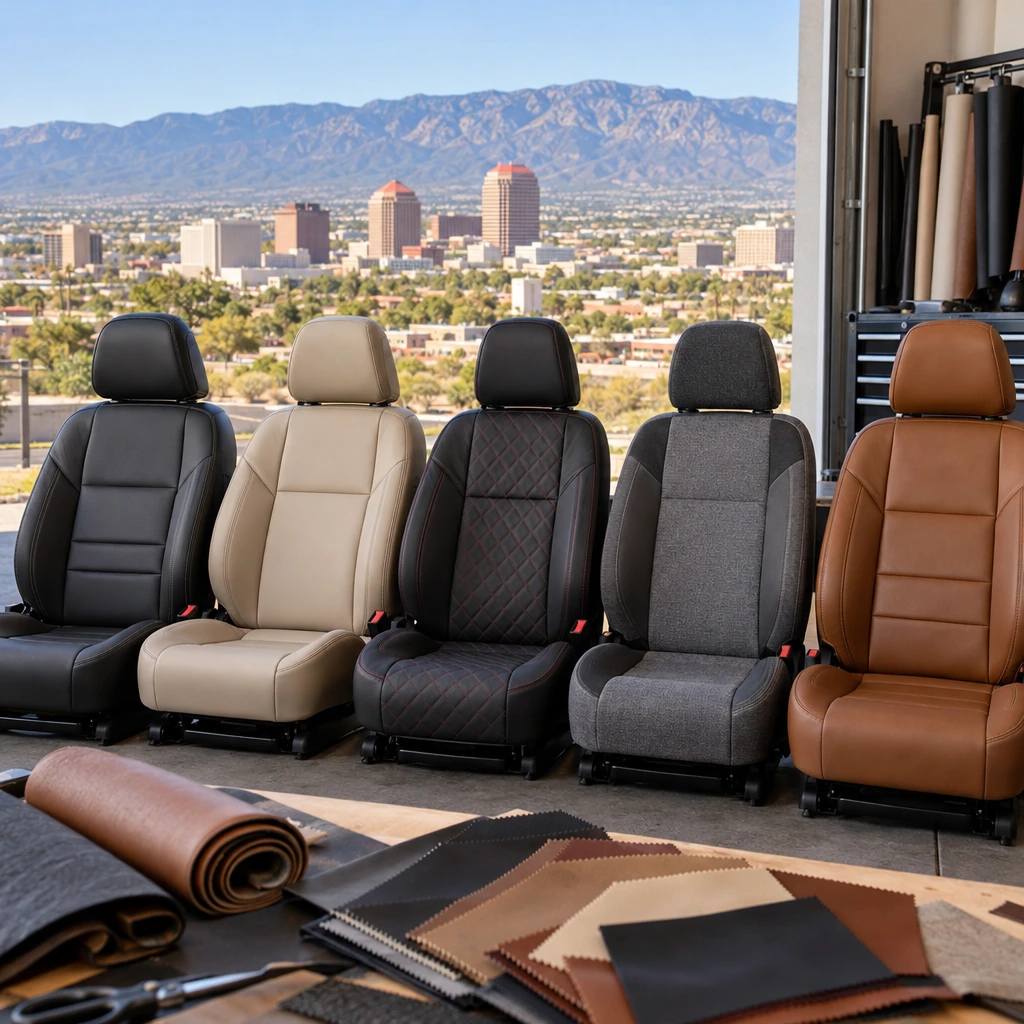
If you are searching for the car seat upholstery cost in Albuquerque, you may be surprised by how much the answer can vary from one vehicle to another. A small tear in a cloth seat is a very different project from replacing cracked leather, rebuilding collapsed foam, or matching an entire interior. The vehicle’s age, seat design, material, damage, built-in features, and Albuquerque’s intense sun can all change the final price.
This guide explains the five biggest factors affecting upholstery cost so you can ask better questions and avoid paying for work your vehicle does not need. You will also learn when a localized car seat repair may be enough, when a full panel or seat cover is more practical, and why safety equipment should always be part of the conversation. For an in-person evaluation, Al’s Upholstery is a walk-in shop with a showroom at 6616 Central Ave SE in Albuquerque.
1. Material Choice Has a Major Effect on Car Seat Upholstery Cost
The material you select is one of the clearest factors affecting upholstery cost. Automotive fabric, vinyl, synthetic leather, and genuine leather each have different purchase prices, installation requirements, durability, and appearance. Even within one category, the color, grain, texture, thickness, and availability can affect the estimate.
Fabric, vinyl, and leather are not priced the same
Cloth upholstery can be a sensible choice for a practical daily driver, especially when the goal is to restore comfort without changing the original look. Vinyl is often useful for work trucks, older vehicles, and interiors that need easy cleaning. Leather or premium automotive hides may be preferred when you want a more luxurious finish or a close match to an existing interior.
However, replacing only one section can be difficult if the original material has faded. A new panel may be technically correct but still look brighter than the surrounding seat. In that situation, you may receive an option to replace a larger section or use a coordinated material instead of trying to make a visibly worn piece look new.
Albuquerque’s sun can influence the best material
Local conditions matter. The National Weather Service’s Albuquerque office reported an annual average temperature of 60.8 degrees Fahrenheit for 2025, with several summer months averaging around 80 degrees or higher. That combination of heat and strong sunlight can accelerate fading, drying, and cracking in vehicle interiors. The National Weather Service Albuquerque 2025 climate summary provides the local temperature data.
AAA also notes that prolonged sun exposure can cause cloth upholstery to fade and leather to fade or crack. AAA’s guidance on heat and vehicle interiors supports using sun protection and selecting materials appropriate for the environment.
For that reason, the least expensive material today is not always the most economical choice over several years. A professional upholstery shop can help you compare appearance, comfort, cleaning needs, and expected wear before you choose.
2. The Size and Location of the Damage Determine the Scope of Work
A second major factor is whether you need a small repair, a replacement panel, a complete seat cover, or work on the cushion beneath the upholstery. The visible tear is not always the full problem. A ripped side bolster may have damaged foam underneath, while a split seam may indicate that the surrounding material has become brittle.
When a localized repair may be enough
A small tear, burn, loose seam, or damaged patch may be repairable without reupholstering the entire seat. This approach can preserve more of the original interior and may make sense when the rest of the seat remains flexible, clean, and structurally sound.
Localized repair is worth asking about when:
- The damage is limited to one panel or seam.
- The surrounding material is not cracked or dried out.
- The seat foam still provides proper support.
- You want to control the project cost while keeping the factory appearance.
On the other hand, a small repair may not be the best long-term answer if the material around it is already failing. A patch placed next to brittle vinyl or cracked leather may simply move the problem a few inches away.
Foam, springs, and cushion shape add labor
Seats do more than provide a surface to sit on. They rely on foam, support structures, and shaped contours for comfort and posture. If the cushion is flat, sagging, lumpy, or compressed, replacing the outer cover alone may leave you disappointed. Rebuilding or reshaping the cushion adds work and materials, but it can make the finished result feel much closer to a properly restored seat.
The same principle applies to driver seats with worn outer bolsters. Constant entry and exit can compress the foam and weaken the edge. A proper estimate should consider both the upholstery and the support beneath it. That is why an in-person inspection is more useful than judging the project from a photograph alone.
3. Seat Features and Safety Systems Can Increase Complexity
Modern vehicle seats may include side airbags, heating elements, ventilation, power adjustments, occupancy sensors, lumbar mechanisms, wiring, and integrated headrests. These features can make the job more involved than removing an old cover and installing a new one.
Airbag-compatible upholstery is essential
If your front seat has a side-impact airbag, the upholstery must be designed and installed so the system can function as intended. The National Highway Traffic Safety Administration explains that side airbags are designed to deploy very quickly and that vehicle safety systems should not be treated as optional trim. NHTSA’s vehicle airbag safety information outlines the role of frontal and side airbags.
NHTSA has also warned that changing or replacing seat trim can affect passenger-sensing systems and other safety equipment when the correct design is not used. NHTSA’s interpretation on replacement seats and safety standards explains why replacement work must preserve the vehicle’s safety functions.
This is one reason a bargain price from an unqualified source can be risky. Ask whether the proposed upholstery is appropriate for your particular seat and whether the installation accounts for any airbag seams, sensors, or wiring.
Heated and powered seats require careful disassembly
Heated-seat elements can be damaged during removal or installation. Power seats and adjustable lumbar supports may also require additional disassembly and reassembly. If a seat includes ventilation fans, memory controls, or unusual factory trim, the labor may be greater than it would be for a simple manual bench seat.
Before requesting a quote, note which features your seat has and mention whether any warning lights are already illuminated. Upholstery work should not be used to conceal an existing airbag or sensor problem. If a safety warning is present, you may need to involve the vehicle manufacturer’s service department or another qualified repair professional before or alongside the upholstery work.
4. Vehicle Design, Seat Quantity, and Matching Requirements Affect Labor
The vehicle itself is another important factor in Albuquerque upholstery prices. A single front bucket seat, a rear bench, a complete three-row SUV interior, and a classic truck seat all require different amounts of removal, pattern work, sewing, fitting, and installation.
One seat versus a complete interior
Repairing one worn driver seat is usually a smaller project than redoing both front seats and a rear bench. However, replacing only one seat can create a mismatch if the other seats have significant fading or wear. Some owners choose to redo matching seating surfaces at the same time so the interior looks consistent.
Large vehicles can also require more material and more time simply because they have larger cushions, additional seating positions, or multiple panels. Trucks with bench seats may be straightforward in shape but still require careful patterning around armrests, fold-down sections, belts, and storage features. SUVs and vans can involve even more pieces.
Original appearance and custom changes require precision
If you want a factory-style restoration, the shop may need to match the original stitching, pleats, piping, panel layout, and color. A custom design—such as contrasting thread, a different center insert, or upgraded material—can also add planning and sewing time.
Bring photographs of the original interior, the vehicle identification information, and any replacement material you want considered. If you are restoring an older car or truck, tell the upholsterer whether originality or personalization is the priority. That decision affects the choice of material, pattern, and finish.
Al’s Upholstery specializes in automotive work and also serves classic car and truck owners. The shop has been in business since 1992, and customers can walk in, view samples in the showroom, and discuss options with Al before committing to a project.
5. The Condition of the Interior and Your Intended Use Shape the Estimate
The fifth factor is how the vehicle is used and what condition the rest of the interior is in. A commuter car, work truck, family SUV, classic vehicle, and recreational vehicle may need very different upholstery solutions, even if the visible damage looks similar.
Daily use can require more durable choices
If you enter and exit the vehicle many times each day, carry tools, transport children, or frequently load pets and equipment, durability may matter more than a showroom-only appearance. A material that is easy to clean and resistant to abrasion may be worth considering, particularly for a driver’s seat or truck bench.
Cleaning habits matter, too. Consumer Reports recommends regular vacuuming for cloth seats and gentle cleaning for leather and vinyl. It also cautions against soaking cushions, since trapped moisture can create odors and other problems. Consumer Reports’ car interior cleaning guide offers practical care advice for different upholstery materials.
Existing wear can change the project recommendation
If the carpet, door panels, headliner, and other seats are also deteriorating, repairing one seat may improve the interior without solving the overall appearance problem. That does not mean you must redo everything at once. Instead, ask which repair will provide the greatest improvement now and which work can wait.
Before you compare estimates, ask these questions:
- Is the quoted work a repair, a panel replacement, or a complete reupholstery job?
- Does the estimate include foam repair or only the outer material?
- Will the selected material tolerate Albuquerque sun and daily use?
- Are airbag seams, sensors, heaters, and wiring being considered?
- What parts of the project are essential, and what parts are optional upgrades?
Conclusion: Get a Clear Car Seat Upholstery Estimate in Albuquerque
The car seat upholstery cost for your Albuquerque vehicle depends on five central issues: material choice, the extent of the damage, seat features and safety systems, vehicle size and matching requirements, and the way the interior is used. A small tear may need only a focused repair, while cracked material, damaged foam, fading, or complex seat equipment may justify a larger restoration.
Do not choose an upholstery option based on price alone. The right solution should fit your vehicle, preserve important safety functions, withstand local sun and heat, and make sense for how you drive. Al’s Upholstery has served Albuquerque and New Mexico since 1992, with automotive upholstery as its specialty. You can visit the walk-in shop and showroom at 6616 Central Ave SE, Albuquerque, NM 87108, or call (505) 242-3583 to discuss your seat repair or custom upholstery project. The shop is open Monday through Thursday from 7:30 AM to 4 PM and Friday from 6:30 AM to noon.